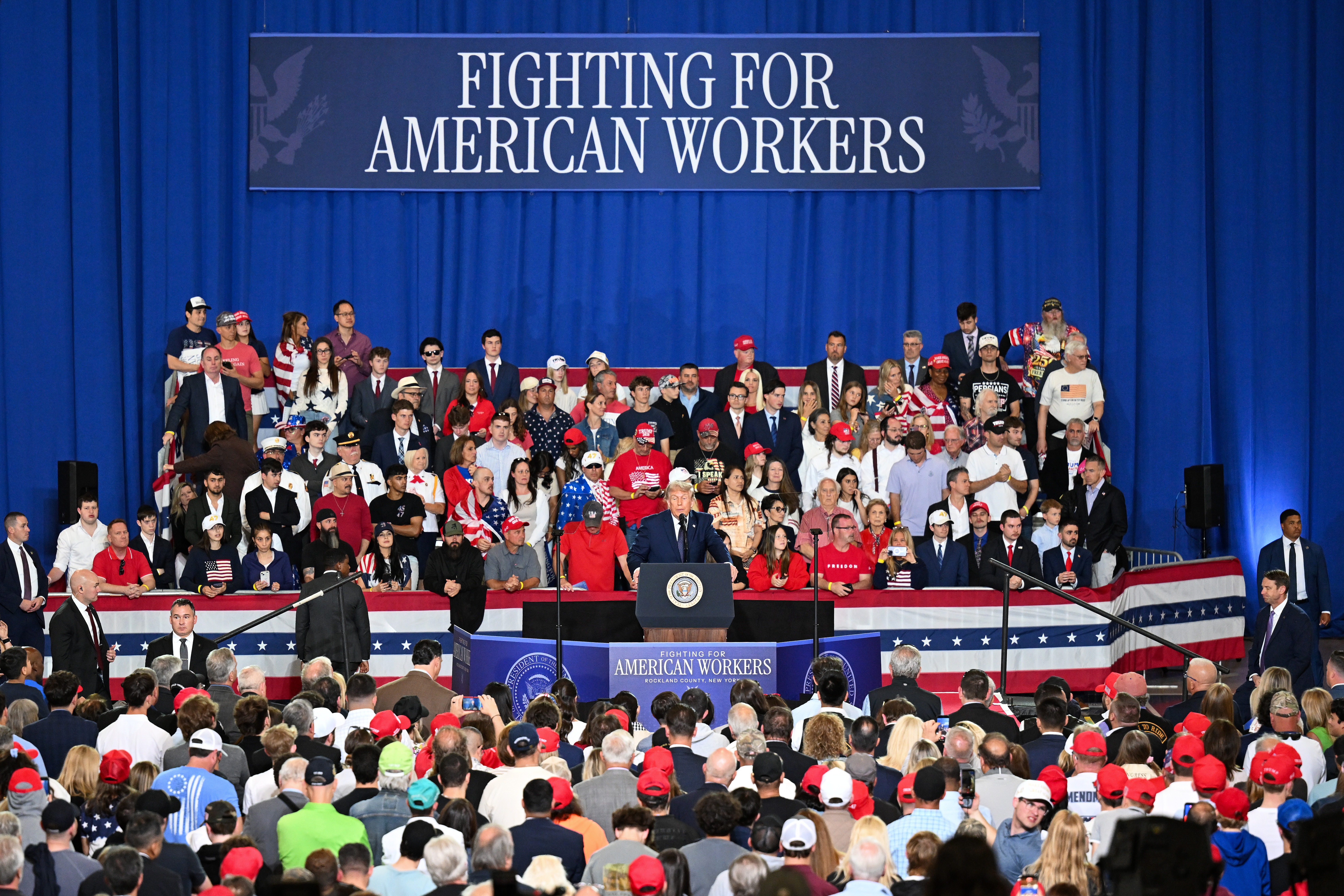
Former US President Donald Trump will participate in a dignified transfer ceremony for US service members killed in action, an event steeped in military honour and national mourning. This solemn occasion comes amidst heightened political activity, following a series of primary victories for Trump-backed candidates, most notably in Arizona, underscoring his enduring influence within the Republican party.
NPR National reported on Wednesday that the former commander-in-chief's attendance at the transfer ceremony offers a poignant counterpoint to the raucous world of US election politics. Such ceremonies are deeply respectful events where the remains of fallen military personnel are formally received on American soil, often attended by high-ranking officials and military leadership. Trump’s presence is likely to be viewed through both a national unity lens and a political one, given his prominent role in the upcoming electoral cycle.
Arizona Sees Trump's Endorsement Reign Supreme
Beyond the sombre military honours, Trump's political machine continues to demonstrate its formidable power. In Arizona, a pivotal swing state, candidates endorsed by the former President secured key nominations, according to NPR National. These victories include the Republican nominations for governor and a highly contested House of Representatives seat. The gubernatorial race, in particular, is an important indicator of national political sentiment, as Arizona has often been a bellwether for broader electoral trends.
The success of these Trump-endorsed candidates highlights the deep loyalty many Republican voters still hold for the former President. His endorsements often provide a significant boost, mobilising his base and frequently overwhelming opponents who lack similar support. This trend suggests that despite past electoral defeats and ongoing legal challenges, Trump remains a kingmaker within the GOP, capable of shaping the party's future direction and candidate roster.
Iran War Funding Debate Ignites
Adding another layer to the complex political landscape, discussions around potential funding for military action in Iran have gained traction. Conservative commentator and retired US Army National Guard officer, Pete Hegseth, has vocally defended requests for such funding. This issue is highly contentious, with profound implications for international stability and US foreign policy, and is likely to spark significant debate in Washington.
Hegseth's defence, as noted by NPR National, comes at a time when the Biden administration is navigating delicate geopolitical challenges in the Middle East. Any move towards increased military engagement in Iran would undoubtedly draw sharp divisions within Congress and among the American public, reminiscent of past debates over interventions in the region. The cost, both in Australian dollars due to potential ripple effects on global markets and in human lives, would be a major point of contention.
What This Means for the US Midterms and Beyond
The confluence of these events – a solemn tribute to fallen soldiers, decisive primary victories for Trump’s chosen candidates, and emerging debates over international military funding – paints a vivid picture of the current political climate in the United States. The upcoming midterm elections, for which these primary results are an early indicator, will be crucial in determining the balance of power in Congress and the trajectory of US domestic and foreign policy.
The continued influence of Donald Trump, even out of office, suggests that the Republican party remains largely in his mould. His ability to rally voters for his chosen candidates demonstrates a grassroots strength that cannot be ignored. Meanwhile, the very real possibility of increased military tensions with Iran, championed by figures like Hegseth, could fundamentally reshape America's global standing and economic outlook, with potential downstream effects on allies, including Australia, through shared security interests and trade relationships.