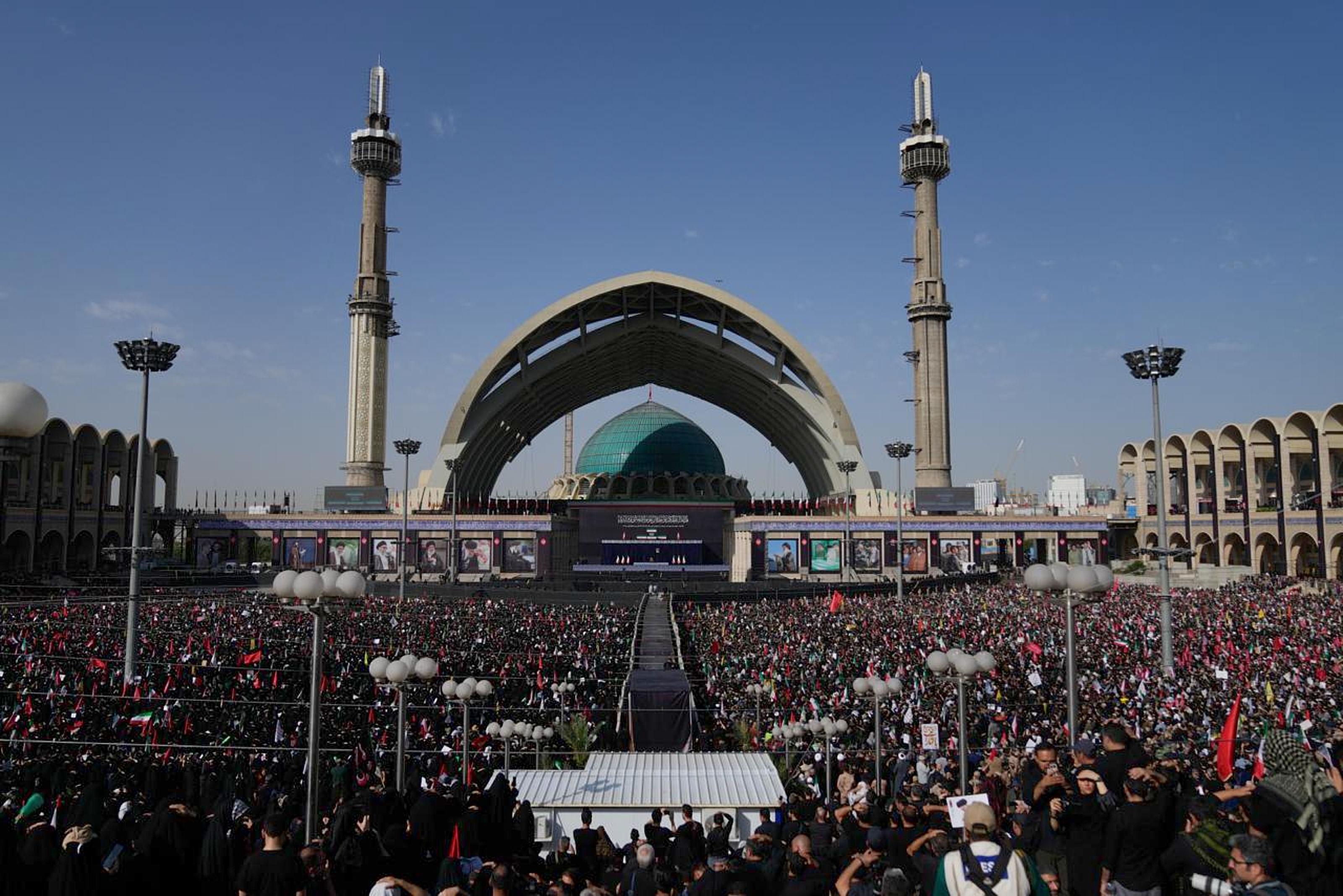
The nation of Iran is currently enshrouded in mourning, as the multi-day funeral rites for its Supreme Leader, Ayatollah Ali Khamenei, commenced on Saturday. The revered, yet often controversial, spiritual and political leader passed away at the age of 86, several months after an airstrike claimed his life at the outset of the ongoing conflict, as reported by NPR World.
His death marks a pivotal moment for the Islamic Republic, leaving a leadership vacuum that is expected to ignite a complex succession process. Crowds of mourners, dressed predominantly in black, have gathered in Tehran and other major cities, their grief palpable as clerics lead prayers and eulogies honouring Khamenei's decades of service and leadership since succeeding Ayatollah Ruhollah Khomeini in 1989.
A Nation in Mourning and Transition
The elaborate funeral proceedings, typical of such a high-ranking religious figure in Iran, involve processions through various holy cities, allowing millions of citizens to pay their respects. State television has been broadcasting continuous coverage, depicting throngs of people weeping and beating their chests in traditional displays of sorrow. The atmosphere is one of intense national introspection, as Iran grapples not only with the loss of its paramount figure but also with the formidable challenges posed by regional instability and international scrutiny.
Analysts suggest that while the public outpouring of grief is genuine for many, particularly those who reverently viewed Khamenei as a steadfast guardian of revolutionary ideals, others might view this period as an opportune moment for potential shifts within the country's rigid political structure. The Supreme Leader's authority was absolute, encompassing all major state policies, foreign affairs, and military decisions, making his absence profoundly impactful.
The Succession Conundrum
The selection of a new Supreme Leader is a meticulously choreographed, yet often opaque, process handled by the Assembly of Experts, an 88-member body of high-ranking clerics. The leading candidates for the role have been subjects of intense speculation for years, even more so since the initial reports of Khamenei's declining health emerged. The new leader will inherit a nation at a crossroads, navigating severe economic sanctions, a complex relationship with Western powers, and a populace yearning for stability and improved living conditions.
While no immediate successor has been named, the coming weeks and months will undoubtedly see a flurry of political manoeuvres behind the scenes. The outcome will not only shape Iran's domestic policies but also significantly influence its standing on the global stage, particularly concerning its nuclear ambitions and its involvement in regional proxy conflicts. The international community, including Australia, will be closely watching these developments, understanding their potential to ripple across the Middle East and beyond.
Geopolitical Ripples and Regional Stability
NPR World's report highlighted that Khamenei's death came months after an airstrike. This context underscores the volatile geopolitical environment in which Iran operates. The conflict referenced, while not explicitly detailed in the summary, points to the ongoing tensions in the region, particularly involving Israel and Western allies. The new Supreme Leader will face immediate pressure to define Iran's posture in this delicate balance of power, potentially influencing the trajectories of numerous international disputes. The stakes are immense, not just for the stability of the Middle East, but for the global economy and future geopolitical alignments. The Australian government, through its Department of Foreign Affairs and Trade, typically monitors such transitions closely, assessing potential impacts on global trade, security, and the safety of Australian citizens abroad.