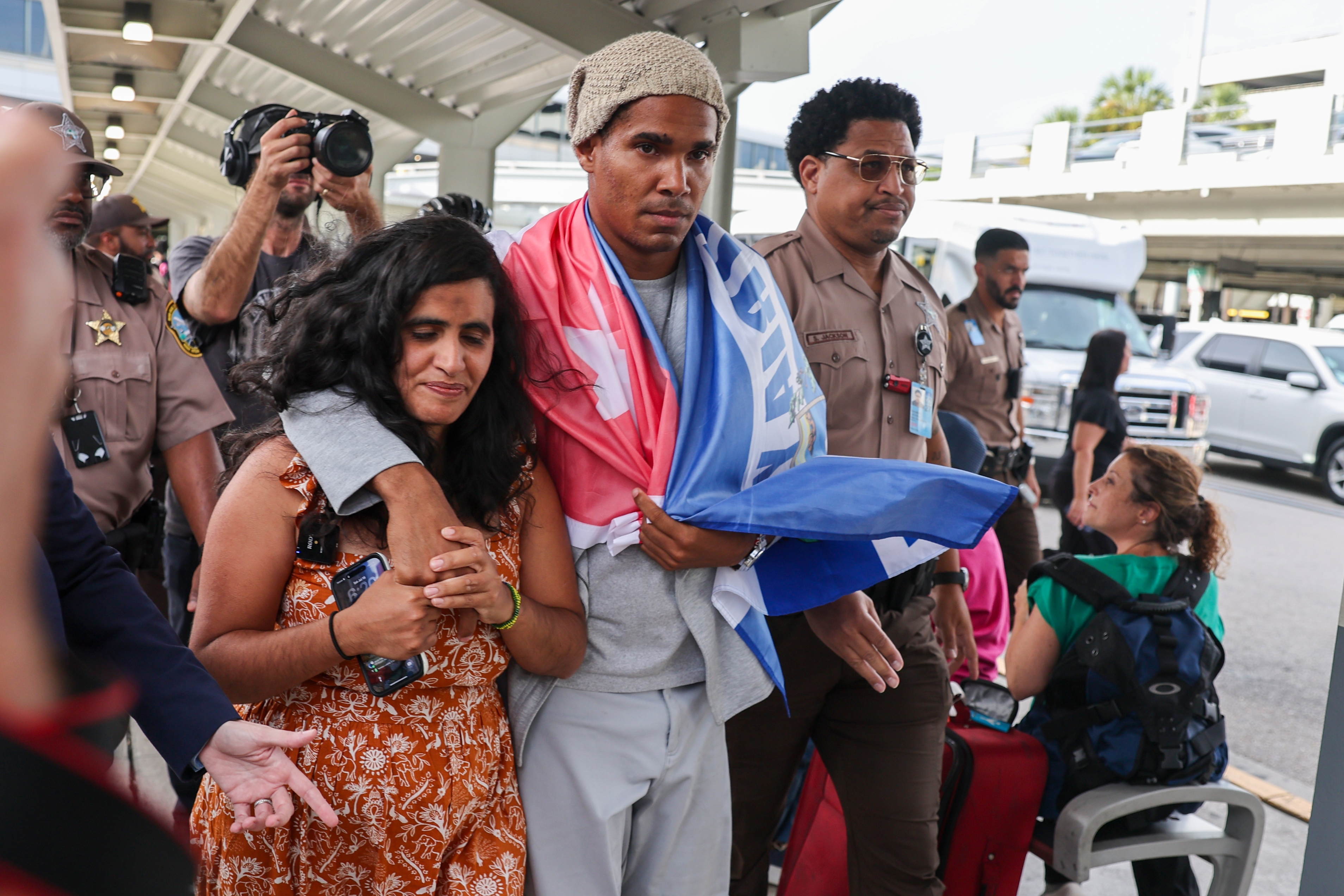
Miami, USA: One of Cuba's most prominent dissident voices, artist and musician Luis Manuel Otero Alcántara, has arrived in Miami, drawing a line under a five-year prison sentence and his subsequent forced exile from the communist-run island nation.
Alcántara's arrival on Saturday marks a dramatic chapter in his long-running battle against the Cuban government, a struggle that has garnered international attention and support from human rights organisations worldwide.
A Perilous Path to Freedom
The 36-year-old artist's release from prison was reportedly conditional on his immediate departure from Cuba, a tactic often employed by the Havana regime to silence dissent and remove influential critics from the political landscape. NPR World reported that Alcántara landed in Florida over the weekend, a move that provides him with freedom but has also severed his physical ties to the country he fought so passionately to change.
Alcántara rose to international prominence as a leader of the San Isidro Movement (MSI), a collective of artists, academics, and journalists who advocate for greater artistic freedom and democratic reforms in Cuba. His activism and provocative performance art often directly challenged the Cuban government's strict censorship and control over cultural expression.
The Price of Creative Dissent
His imprisonment in 2021 followed his participation in widespread anti-government protests that swept across the island, an unprecedented display of popular discontent. Alcántara was charged with sedition, public disorder, and contempt – charges widely condemned by international observers as politically motivated. Human rights groups, including Amnesty International, had repeatedly called for his unconditional release, classifying him as a prisoner of conscience.
During his incarceration, concerns for Alcántara's health and well-being frequently emerged, with reports of hunger strikes and deteriorating conditions. His plight became a rallying point for Cuban exiles and international artists, amplifying calls for greater respect for human rights and political freedoms in Cuba. His case shone a spotlight on the challenges faced by those who dare to speak out against the Cuban government, highlighting the severe penalties for dissenting voices.
A New Chapter, A Continuing Cause
While his arrival in the United States offers personal freedom, it also signifies the heavy cost of his activism. Alcántara had consistently expressed his desire to remain in Cuba, using his art as a tool for social and political commentary from within his homeland. His enforced departure means that his iconic and often confrontational artistic interventions will now be conducted from afar, a significant loss for the burgeoning independent art scene in Cuba.
It remains to be seen how Alcántara will continue his activism from outside Cuba. However, his presence in Miami, a hub for the Cuban diaspora, is expected to galvanise further support for human rights and democratic change on the island. His story serves as a stark reminder of the ongoing struggle for freedom of expression in many parts of the world, and the profound personal sacrifices individuals like Alcántara make in pursuit of their beliefs even at a great financial and personal cost, potentially costing them hundreds of thousands of dollars in lost earnings and legal fees. The international community, including Australian foreign policy observers, will be watching closely to see the next chapter unfold for this courageous artist.