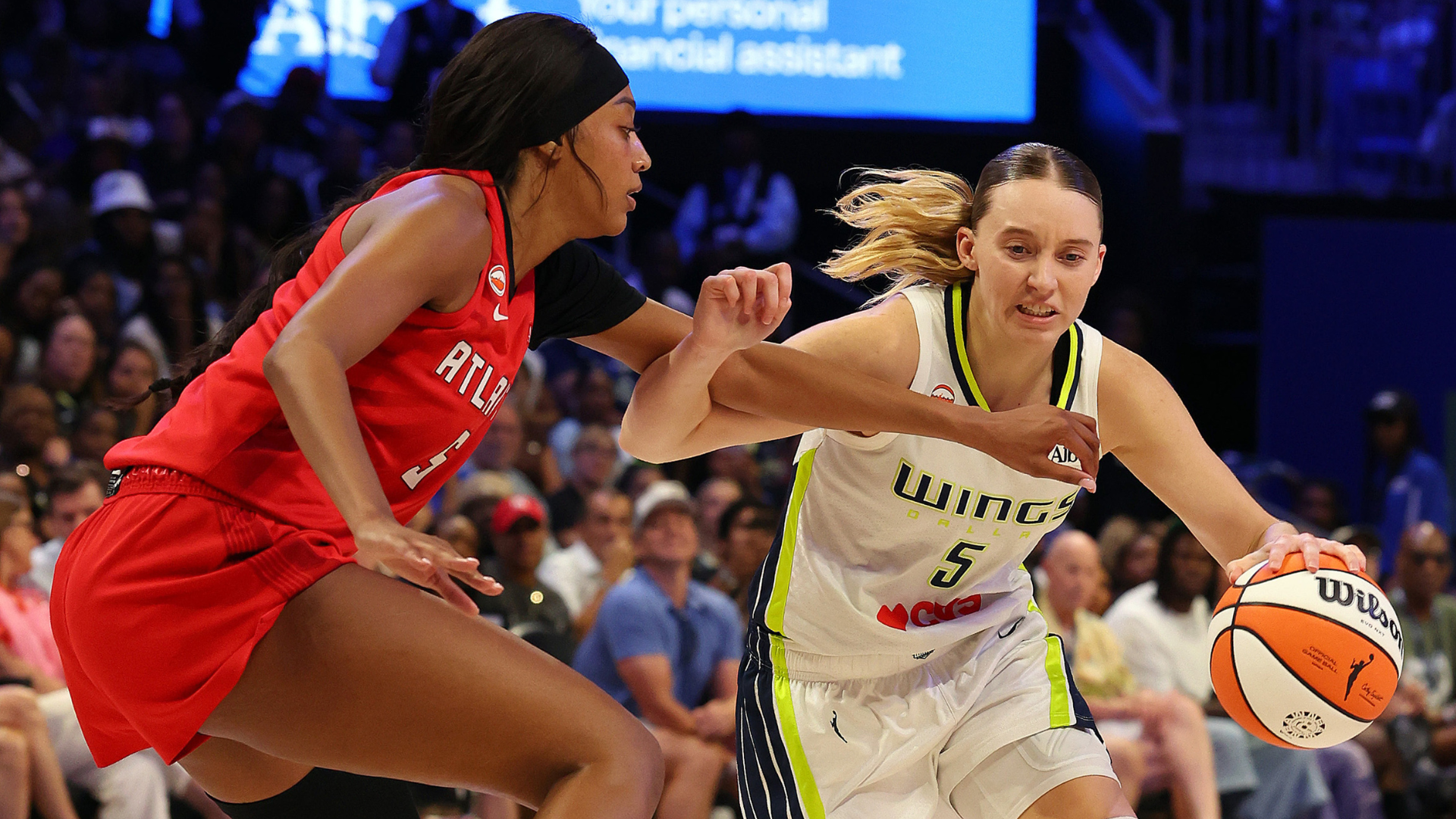
The Women's National Basketball Association (WNBA) is facing scrutiny this week following the contentious deletion of a social media post that appeared to show two of its most prominent stars, Angel Reese and Paige Bueckers, engaging in a light-hearted wager on an upcoming game. The incident has sparked debate across social media platforms and sports news outlets, raising questions about the league’s content strategy and its stance on player conduct related to gambling.
The now-scrubbed post, originally disseminated by the WNBA's official account, reportedly captured a moment between the Chicago Sky's Reese and the New York Liberty's Bueckers. The pair, both burgeoning talents with significant fan followings, were seen discussing a bet on the outcome of a game between the Atlanta Dream and the Dallas Wings. While the precise nature of the wager remains unconfirmed due to the post's rapid removal, CBS Sports NY was among the first to report on the gaffe, noting the league's subsequent acknowledgement that the content had "missed the mark."
A Bet, A Deletion, And A Dilemma
The short video clip, which quickly circulated before its official eradication, supposedly showed Reese and Bueckers playfully interacting about the game's result. This casual exchange, while seemingly innocuous to many, tripped an alarm for the WNBA, particularly in an era where professional sports leagues globally are navigating increasingly complex relationships with the burgeoning legal sports betting industry. The league's swift action to remove the content suggests a heightened sensitivity to any material that could be interpreted as endorsing or even normalising gambling among its athletes, especially given the strict anti-gambling policies typically enshrined in player contracts.
Sources close to the league, speaking anonymously due to the sensitive nature of internal communications, suggested the deletion was a pre-emptive measure to avoid any misinterpretation. The fear, it seems, was not that the players had committed a serious infraction, but rather that the league's own platform was seen to be promoting an activity that players are strictly regulated from participating in, or influencing.
Integrity Under The Hoop
The WNBA's immediate retraction highlights the delicate balance professional sports organisations must strike. On one hand, leagues are eager to foster player personalities and behind-the-scenes content that engages fans, driving interest and viewership. On the other, they are bound by stringent rules designed to protect the integrity of the game, particularly as sports betting becomes more pervasive. This incident underscores the tightrope walk required to maintain a playful, accessible image without inadvertently breaching the foundational principles of fair play and anti-corruption.
Australian sports bodies, including the National Rugby League and the Australian Football League, have similarly strict guidelines for player conduct regarding betting. Breaches often result in significant fines, reputation damage, and lengthy suspensions, demonstrating the global consensus on the importance of insulating athletes from gambling activities that could compromise sporting integrity.
Fan Backlash And Media Scrutiny
The deletion, rather than quelling discussion, has instead fuelled it. Many fans and media personalities have taken to social media to express confusion and mild outrage, arguing that the league's response was an overreaction. Critics postulate that the interaction was clearly a harmless, informal exchange between friends, and its removal stifles the very player authenticity the league often strives to showcase. "It was just a bit of banter, not a multi-million dollar betting syndicate," one fan quipped on X (formerly Twitter). Others criticised the 'nanny state' approach, suggesting it detracts from the spontaneous interactions that endear players to their audience.
The incident serves as a salient reminder of the challenges inherent in managing digital content for public consumption. While the WNBA has indicated the post simply "missed the mark," the ensuing debate illuminates the fine line between engaging content and perceived impropriety in the evolving landscape of professional sports and gambling.