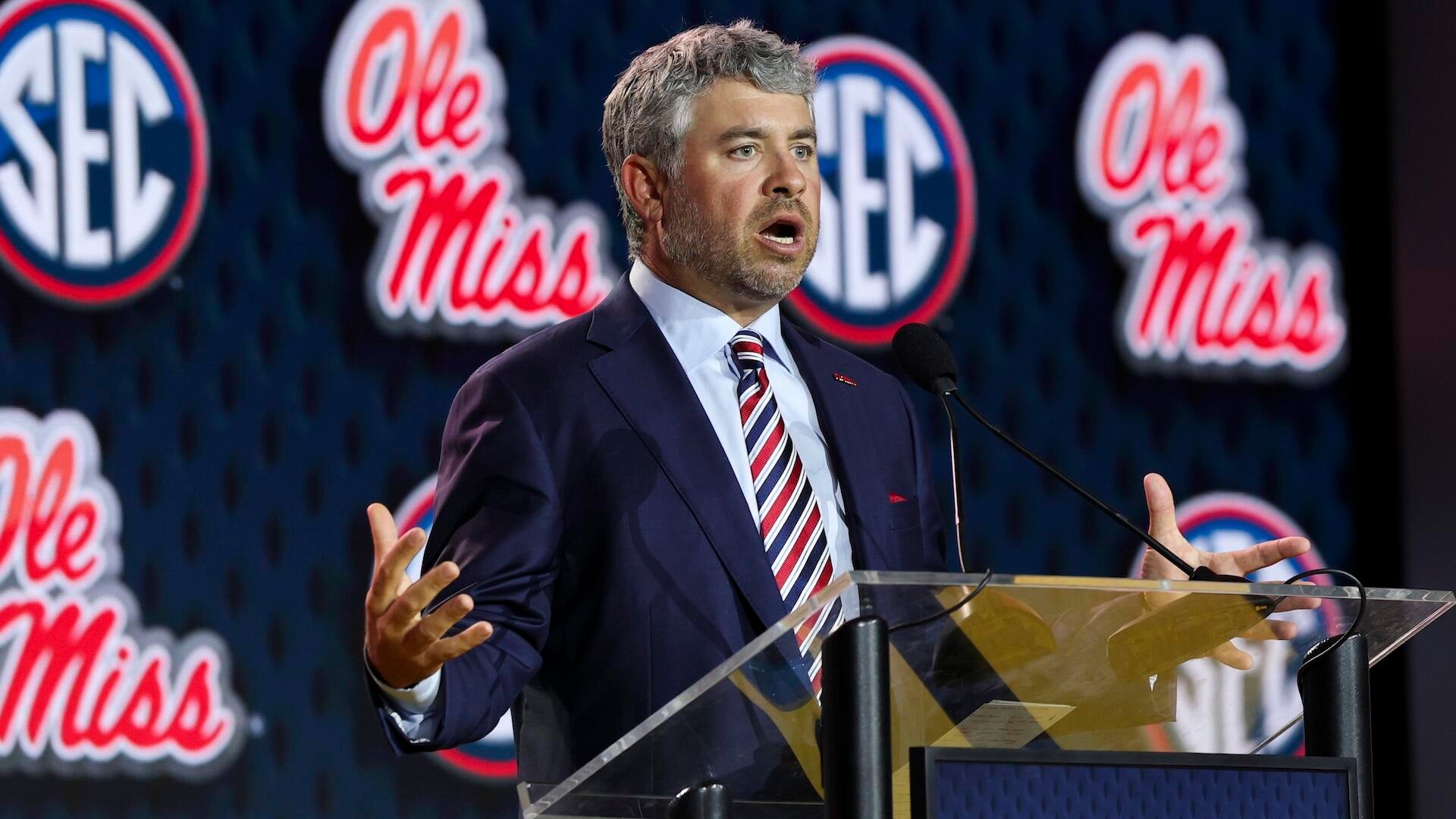
The genteel world of American college football has been rocked by an escalating stoush over player recruitment, with Ole Miss defensive coordinator Pete Golding front and centre, fiercely batting away allegations of ‘tampering’ in the high-stakes transfer market. The controversy, which dominated discussions at the recent SEC media days, underscores the seismic shifts occurring in US collegiate sport, driven by significant changes to athlete compensation and transfer rules.
Golding, responding to pointed questions from journalists, bristled at insinuations that his program engages in illicit approaches to entice players from rival institutions. The allegations, largely stemming from comments made by Clemson Tigers coach Dabo Swinney, paint a picture of an increasingly aggressive and, some argue, unethical pursuit of talent, particularly through the lucrative Name, Image, and Likeness (NIL) collectives that now allow college athletes to earn substantial sums.
The NIL Effect: A Game Changer Down Under?
The introduction of NIL legislation in the US has fundamentally reshaped college athletics, transforming amateur sport into a multi-million dollar industry. Australian observers, accustomed to the more restrained financial landscape of local university sports, might find the scale bewildering. NIL deals, which can see top athletes command six-figure sums (hundreds of thousands of Australian dollars) for endorsements and appearances, have created an entirely new dimension to recruiting. This financial incentive is at the heart of the ‘tampering’ debate, with critics suggesting that some programs use NIL as a thinly veiled inducement for players to transfer, bypassing traditional recruitment ethics. Golding, however, firmly maintains that Ole Miss operates within the established, albeit evolving, parameters. He emphasized that genuine interest from a player, once entered into the NCAA transfer portal, is the sole basis for their engagement.
Swinney's Salvo: Accusations From the Top
The origins of this particular spat can be traced back to remarks by Clemson’s Dabo Swinney, a highly respected — and often outspoken — figure in college football. Swinney, whose program has historically prided itself on developing players rather than relying heavily on transfers, expressed frustration with what he perceives as a 'wild west' environment. While not naming Ole Miss directly, his comments about programs allegedly contacting players still under contract with other universities resonated widely, leading many to infer a direct reference to institutions like Golding’s. Golding’s animated defence at the SEC media days, as reported by CBS Sports NY, was a direct pushback against these underlying accusations, asserting Ole Miss’s integrity and adherence to NCAA regulations.
Navigating the Transfer Portal's Turbulent Waters
Central to the controversy is the NCAA’s transfer portal, a digital database that allows student-athletes to declare their intention to transfer to another institution. This mechanism, designed to provide athletes with greater autonomy, has inadvertently become a lightning rod for ‘tampering’ claims. Once a player enters the portal, other schools are permitted to contact them, creating a dynamic that some coaches believe is exploited by programs to poach talent. Golding highlighted the distinction, arguing that engagement with an athlete already in the portal is legitimate, unlike illicit approaches to players prior to their official declaration. The ongoing tension reflects a broader struggle within the NCAA to balance athlete freedom with maintaining competitive fairness and ethical recruitment practices in an increasingly professionalised collegiate landscape. This debate is far from over, with the financial stakes – and the careers of young athletes – hanging in the balance.