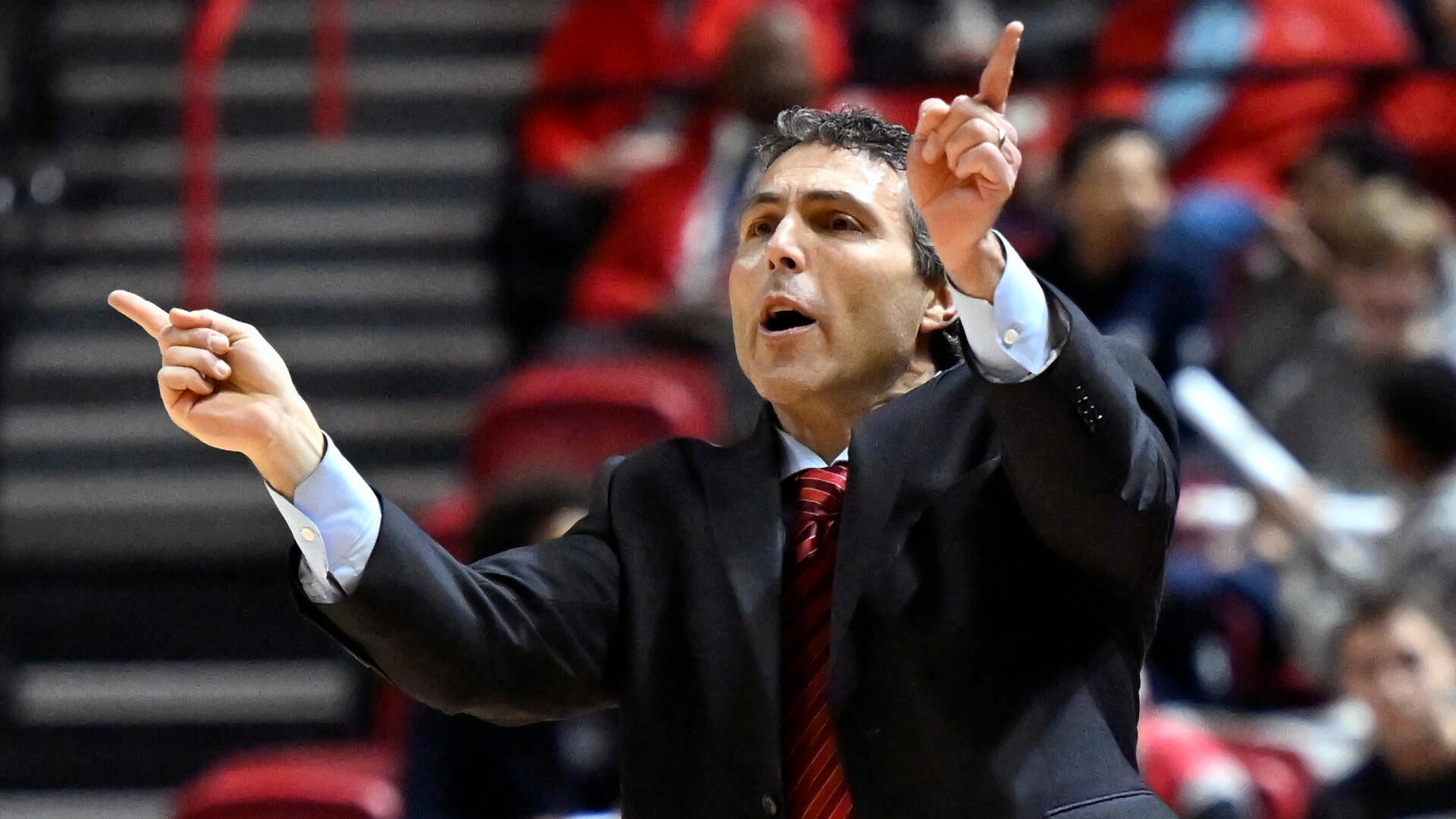
Las Vegas, USA – The sporting world was left reeling this week after Josh Pastner, head coach of the storied UNLV Runnin' Rebels men's basketball program, backtracked on an extraordinary assertion that the team was 'for sale' to the tune of A$15 to A$18 million. The astonishing declaration, initially reported by CBS Sports NY, had ignited a firestorm of speculation and concern regarding the financial stability and future of one of America's most iconic college basketball teams.
Pastner's initial comments, made during a public appearance, suggested an urgent need for a substantial cash injection, leading many to interpret his plea as a literal distress signal for the program. The notion of a university athletic program, particularly one with the historical cachet of UNLV, being dangled on the open market like a corporate entity sent shockwaves through the National Collegiate Athletic Association (NCAA) and its vast network of fans and stakeholders. Local media outlets in Nevada were quick to pick up on the dramatic turn of events, questioning the implications for the university's reputation and the morale of its student-athletes.
Clarifying the 'For Sale' Frenzy
In a swift and somewhat sheepish clarification, Pastner has now stated that his earlier remarks were not to be taken literally. "The UNLV basketball program is not for sale," Pastner confirmed to reporters, seeking to douse the flames of controversy he himself had ignited. He explained that his comments were intended to be a hyperbolic call to action, aimed at galvanising support and financial investment from the university's alumni and boosters. The coach elaborated that the substantial sum he mentioned was merely an aspirational figure for funding improvements and ensuring the program's competitiveness in the fierce landscape of US college basketball.
CBS Sports NY, the first to report on the initial 'for sale' claim, has been instrumental in tracking the unfolding drama. Their reporting highlighted the widespread confusion and anxiety generated by Pastner's original statement. The network noted that while college sports programs often seek donations and cultivate wealthy benefactors, the phrasing used by Pastner was uniquely unsettling, giving the impression of a desperate fire sale rather than a conventional fundraising drive.
The High Stakes of College Hoops
The incident underscores the intense financial pressures and competitive demands placed upon major college athletic programs in the United States. Universities invest significant resources into their sports teams, with the expectation that success on the playing field will translate into increased applications, alumni engagement, and ultimately, greater financial contributions. Programs like the Runnin' Rebels, once a dominant force, constantly battle for top recruits and highly-sought-after coaching talent, all of which come at a considerable cost. The transfer portal, a relatively new mechanism allowing college athletes to switch universities with greater ease, has also added another layer of complexity and expense, as programs vie for established talent.
Rebuilding the Runnin' Rebels Brand
UNLV's Runnin' Rebels boast a decorated history, including a national championship in 1990, making them a significant draw in the glittering city of Las Vegas. However, recent years have seen the program struggle to reclaim its past glory. Pastner, in his attempts to revitalise the team, has clearly felt the weight of these expectations. His dramatic, albeit misconstrued, appeal highlights the urgent need for substantial investment to compete with perennial powerhouses in conferences such as the Big Ten or the SEC, where budgets routinely eclipse those of many mid-major programs.
What's Next for UNLV?
While the immediate crisis of a 'for sale' basketball team has been averted, the incident has undoubtedly shone a spotlight on the financial realities facing UNLV and other similar programs. The university now faces the task of reassuring stakeholders and channelling the unexpected publicity into genuine fundraising efforts, rather than allowing it to become a lingering public relations headache. The clarification from Pastner aims to stabilise the situation, but the initial alarm may serve as a potent, if accidental, catalyst for the increased financial support he passionately believes the Runnin' Rebels program requires to thrive once more.