
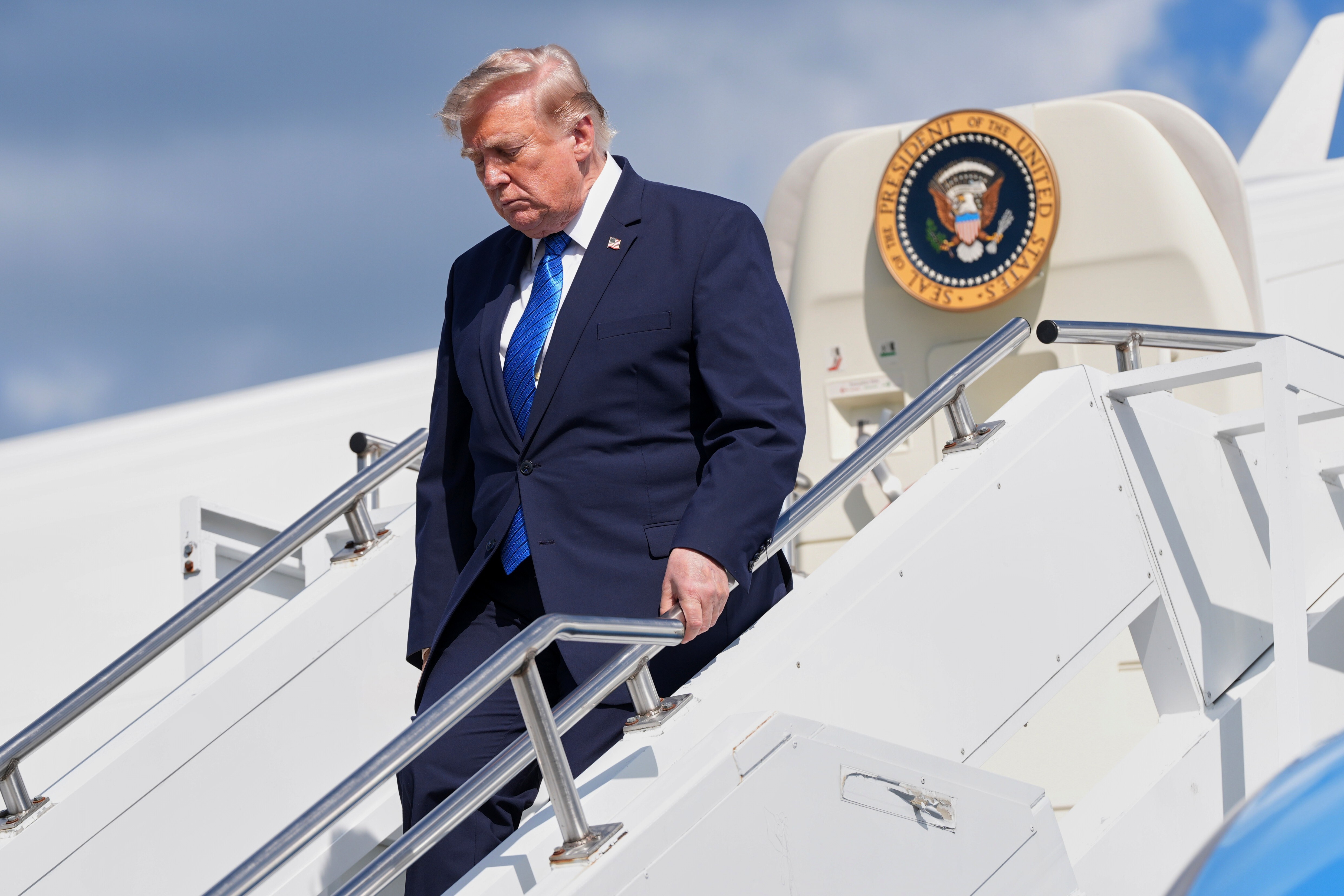
Washington D.C. sources suggest a major escalation in the volatile Persian Gulf has been narrowly averted, after US President Donald Trump announced he had called off retaliatory strikes against Iran at the eleventh hour. The dramatic declaration, delivered late last night, cited appeals from unspecified Middle Eastern countries and the alleged agreement to the “perimeters of a deal” as reasons for the sudden reversal.
President Trump's statement, initially reported by NPR World, suggests a complex diplomatic manoeuvre unfolding behind the scenes of escalating military tensions. The President indicated that Iran, along with other nations in the region, had specifically requested the United States “to hold off any attack.” This surprising revelation comes amidst heightened anxieties following the downing of a US surveillance drone by Iran, which Washington insists was operating in international airspace.
Diplomacy at the Precipice
The decision to cancel the strikes reportedly came just as US military assets, including fighter jets and naval vessels, were being positioned for offensive operations. The abrupt halt underscores the fluid and unpredictable nature of the current geopolitical climate. While no specifics of this purported “deal” have been released, its existence, if confirmed, could signal a significant de-escalation path, or alternatively, a highly precarious temporary truce.
Australian officials are understood to be closely monitoring the situation. A spokesperson for the Department of Foreign Affairs and Trade (DFAT) reiterated calls for restraint and dialogue from all parties involved, emphasising the potential for regional instability to impact global trade and security. Australia has a vested interest in the stability of the Strait of Hormuz, a crucial shipping lane for approximately one-fifth of the world’s petroleum and gas.
Regional Appeals and Ambiguity
The assertion that “Iran and other Middle Eastern countries” appealed directly to the US to halt military action introduces a new layer of complexity. It raises questions about which specific nations were involved in these alleged negotiations and what assurances, if any, were provided to Washington. Analysts suggest that the United Arab Emirates, Saudi Arabia, or even Oman could have played a mediating role, given their historical diplomatic ties and their own strategic interests in avoiding a full-scale regional conflict.
The lack of concrete details regarding the “deal’s perimeters” has naturally led to widespread speculation. Is it a return to the negotiating table regarding Iran's nuclear program? A commitment to de-escalate military posturing in the Gulf? Or something else entirely? The White House has yet to elaborate on the President’s statement, leaving much to interpretation and further fuelling uncertainty.
Economic Fallout and Oil Prices
Global financial markets have reacted with cautious optimism, though the inherent volatility of the situation continues to exert pressure. While an immediate war scenario has seemingly been averted, the underlying tensions remain. The price of Brent crude oil, which had surged past $70 AUD a barrel in earlier trading on fears of conflict, saw a modest pullback following President Trump's announcement, but analysts warn that sustained peace is far from guaranteed. Any perceived failure of this alleged “deal” could see prices spike once more, impacting Australian petrol prices and broader economic stability.
Observers are now keenly awaiting further clarification from Washington and Tehran. The coming days will be critical in determining whether President Trump's eleventh-hour decision truly marks a turning point towards de-escalation, or if it merely postpones an inevitable confrontation in an already fraught region.