
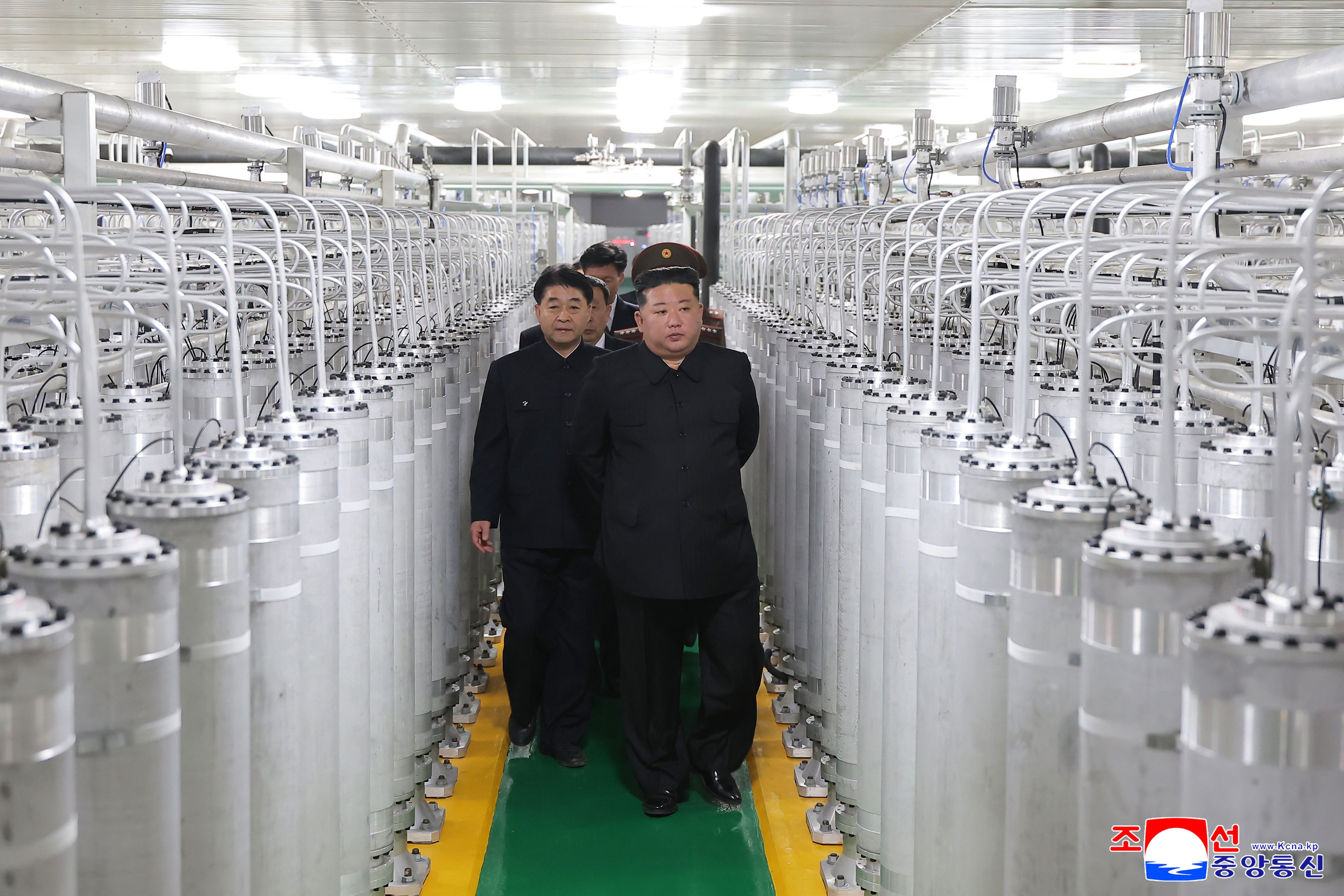
Seoul has quietly, but definitively, shelved its policy of demanding immediate denuclearisation from North Korea before engaging in substantive diplomatic dialogue. This recalibration signals a new, potentially fraught, chapter in inter-Korean relations.
The shift, widely noted by international observers, comes as successive South Korean administrations have struggled to make headway with the reclusive North, which continues to advance its nuclear and missile programs unchecked. The previous hardline stance, while principled, often led to diplomatic stalemates, leaving little room for de-escalation or trust-building initiatives.
A New Diplomatic Calculus
Under the revised approach, Seoul appears more open to exploring a phased process, or even parallel negotiations, where denuclearisation talks could run concurrently with discussions on other issues, such as economic cooperation or humanitarian aid. This more pragmatic outlook acknowledges the deeply entrenched nature of North Korea's nuclear arsenal, which Pyongyang views as crucial to its regime's survival.
However, the question remains whether this olive branch will be met with acceptance or further defiance from Pyongyang. Analysts are divided, with many expressing skepticism that the North will readily return to the negotiating table, regardless of Seoul's flexibility. "The North Koreans have consistently demonstrated a preference for unilateral action and a deep distrust of external negotiations, especially when it comes to their nuclear program," observed one regional security expert.
Pyongyang's Unwavering Ambitions
Despite Seoul's overtures, Pyongyang has shown no public indication of softening its position. Recent months have seen a flurry of missile tests and increasingly aggressive rhetoric from the Kim Jong Un regime, underscoring its determination to solidify its status as a nuclear power. The change in Seoul's strategy, according to NPR World, is a direct response to the perceived futility of the previous approach in the face of Pyongyang's unwavering ambitions.
For Australia, a key US ally in the Indo-Pacific, the evolving dynamics on the Korean Peninsula are a matter of close watch. Any escalation of tensions or instability in the region could have ripple effects, impacting global trade routes and broader security architecture. While Canberra has consistently supported international efforts to denuclearise North Korea, it also advocates for dialogue and de-escalation.
The Path Ahead: Hurdles and Hope
Skeptics argue that Pyongyang might interpret Seoul's shift as a sign of weakness, potentially emboldening them to extract more concessions without offering substantial commitments on denuclearisation. The challenge for South Korea will be to craft a strategy that incentivises engagement without inadvertently legitimising North Korea's nuclear status.
Conversely, proponents of the new strategy hope that a more flexible approach could create a much-needed opening for communication, even if it doesn't lead to immediate breakthroughs. Small steps, such as confidence-building measures or renewed inter-Korean exchanges, could slowly chip away at decades of animosity. The ultimate goal, however, remains a nuclear-free Korean Peninsula, a prospect that still appears distant and fraught with geopolitical complexities. The coming months will reveal whether Seoul's strategic gamble can break the diplomatic impasse, or if it will simply pave the way for more frustration.


