
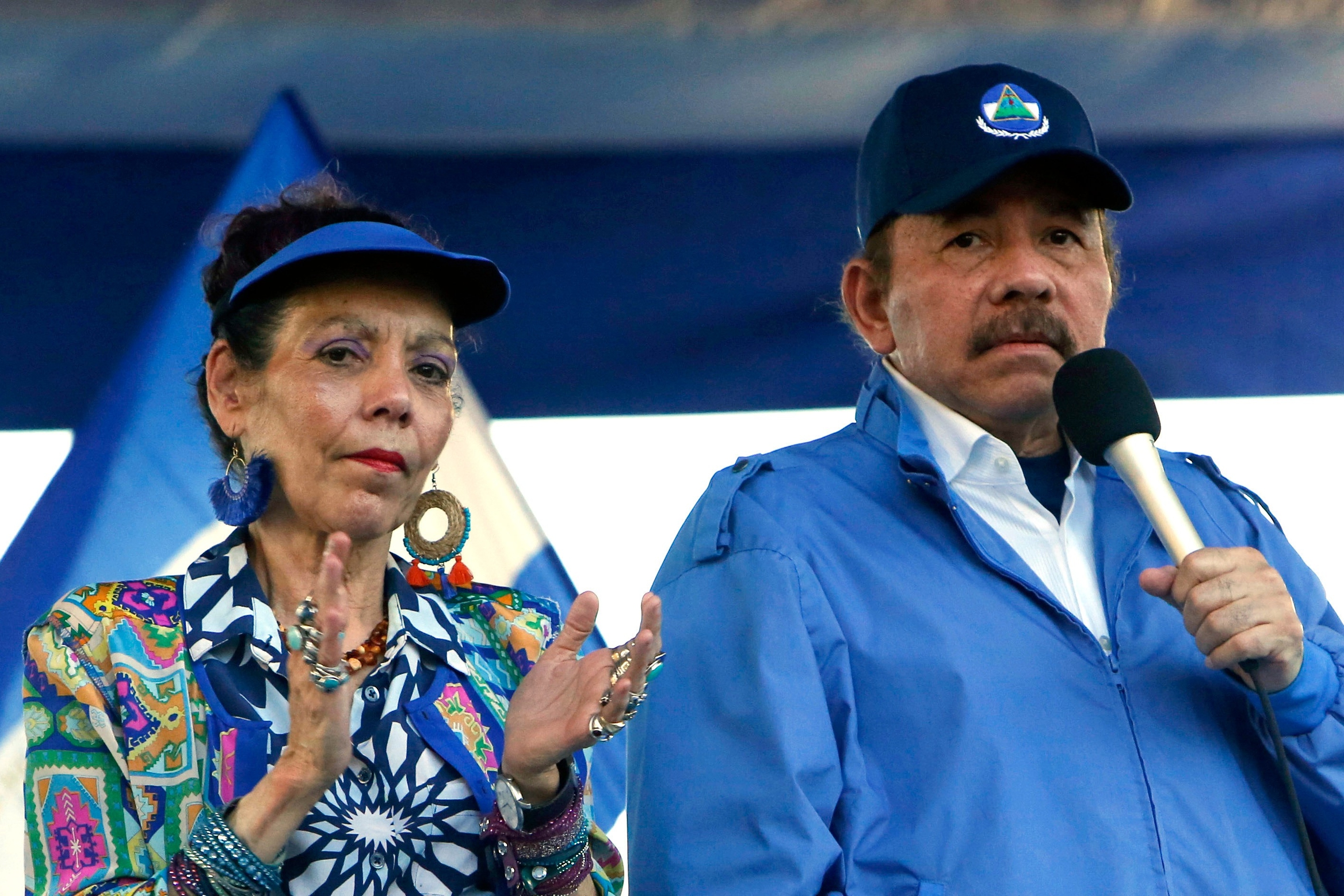
In a move that has sent shockwaves through the international community, Nicaragua's strongman President, Daniel Ortega, has unilaterally declared the cancellation of the country's next scheduled elections, originally slated for November 2027. This audacious decision, reported by NPR World, solidifies Ortega's two-decade grip on power, effectively transforming Nicaragua into a de facto one-party state and further isolating the nation on the global stage.
Ortega, a former Sandinista revolutionary hero turned authoritarian ruler, has systematically dismantled democratic institutions since his return to power in 2007. This latest decree, delivered without warning or apparent legal justification, represents the most significant erosion of civil liberties and political freedoms to date, extinguishing any remaining flicker of democratic hope for the long-suffering Nicaraguan populace. The announcement has been met with immediate condemnation from human rights organisations and democratic governments worldwide.
A Dynasty Forged in Repression
Ortega's political journey is a complex tapestry woven with revolutionary zeal and subsequent authoritarian tendencies. He first rose to prominence following the 1979 Sandinista revolution, serving as president throughout much of the 1980s before losing power in 1990. His return to the presidency in 2007 marked a pivotal shift, as he steadily began consolidating power, sidelining opposition figures, and quashing dissent. NPR World notes that his administration has been characterised by increasingly repressive tactics, including the jailing of political opponents, suppression of independent media, and brutal crackdowns on anti-government protests.
His wife, Vice President Rosario Murillo, plays a central role in this authoritarian structure, often described as an equal partner in the regime's control. Critics argue that the cancellation of elections is a strategic move to ensure the continuation of the Ortega-Murillo dynasty, eliminating any democratic path for succession. This calculated manoeuvre paints a bleak picture for Nicaragua's future, suggesting an ingrained political system designed to perpetuate the ruling family's influence indefinitely.
International Outcry and Economic Fallout
The immediate international reaction to Ortega's decree has been one of sharp criticism and dismay. Governments from democratic nations, including Australia, are expected to review their diplomatic and economic engagements with Nicaragua. While no specific sanctions have been announced, a collective international response is likely to further isolate the Ortega regime, potentially impacting Nicaragua's already struggling economy. Foreign aid, investment, and trade partnerships could face significant headwinds as a result of this blatant disregard for international norms and democratic principles.
Sources close to diplomatic circles suggest that Canberra may consider options ranging from further travel restrictions on Nicaraguan officials to re-evaluating aid programs. The Australian government, through its Department of Foreign Affairs and Trade (DFAT), has consistently advocated for democratic principles and human rights globally, making Ortega's latest move particularly unpalatable. The potential for broader international sanctions, spearheaded by the United States and European Union, could inflict serious damage on a nation already grappling with high poverty rates and limited economic opportunities. Such financial pressures, however, have historically done little to sway Ortega's resolve.
A Dark Chapter for Central American Democracy
Ortega's decision casts a long shadow over the future of democracy in Central America. The region has a turbulent history of political instability and authoritarian rule, and Nicaragua's regression further emboldens similar strongman tendencies in neighbouring countries. The lack of accountability and the complete disregard for electoral processes set a dangerous precedent, undermining regional efforts towards political liberalisation and human rights protection. For ordinary Nicaraguans, this announcement signifies the closure of even the most rudimentary avenues for political expression and change.
With avenues for peaceful dissent effectively closed, concerns are mounting regarding the potential for increased social unrest and human rights abuses within the country. The international community faces a critical challenge in finding effective ways to pressure the Ortega regime towards a more democratic path, while simultaneously providing humanitarian support to the Nicaraguan people, who bear the brunt of their government's increasingly autocratic rule.


