
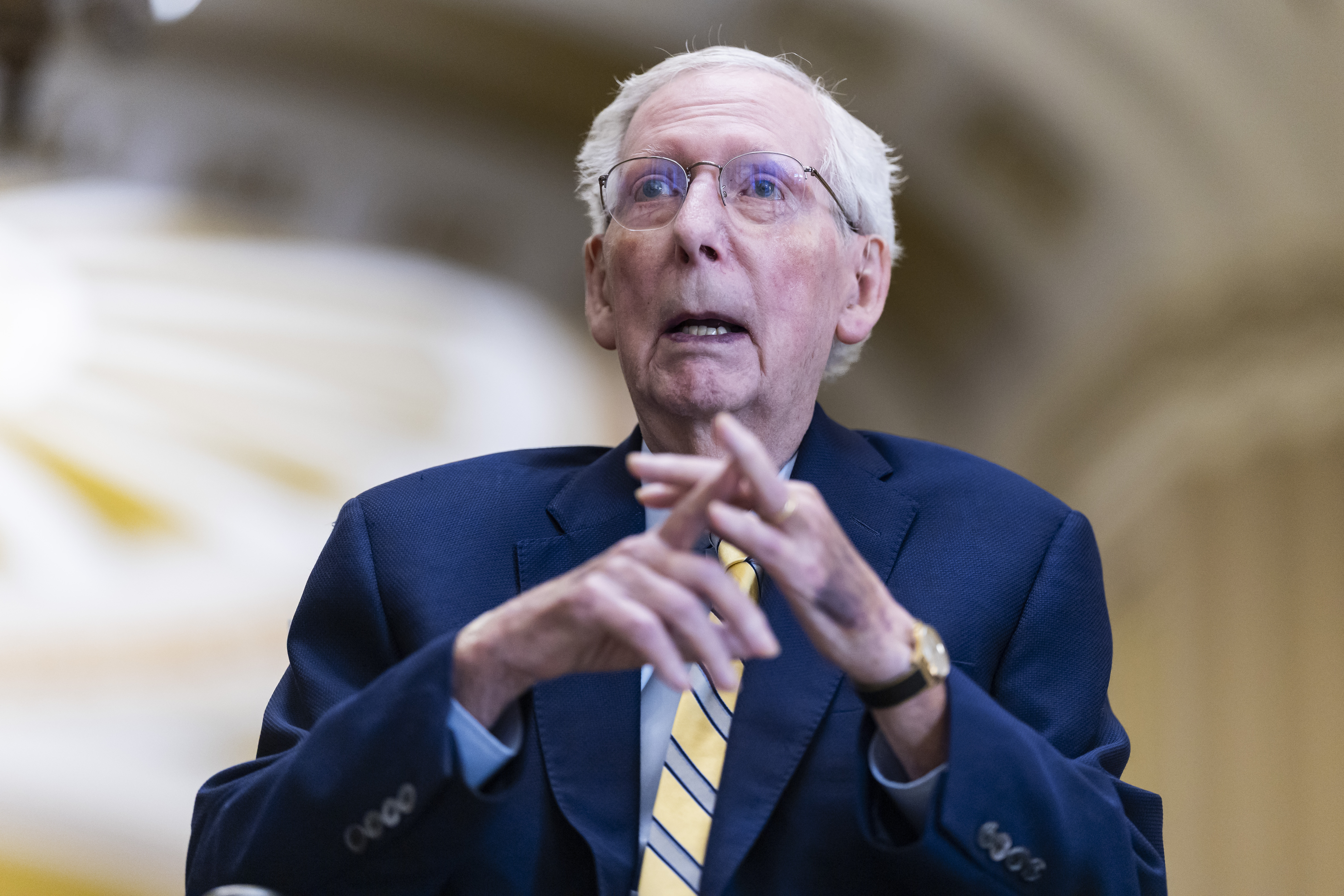
WASHINGTON DC: The United States Senate’s most powerful Republican, Mitch McConnell, has resumed his duties on Capitol Hill after weeks of recovery from a fall that left him briefly unconscious and sparked concerns about the health of America’s aging political leadership.
The 81-year-old senator from Kentucky, a pivotal figure in American politics for decades, returned to a warm reception from colleagues on Monday, marking the end of an extended absence that had left a void in Republican Party leadership.
His return was greeted with bipartisan relief, though it inevitably reignited discussions about the physical demands of high office and the transparency surrounding the health of senior politicians.
A Perilous Fall and Weeks of Silence
McConnell’s ordeal began on March 8, when he tripped and fell during a private dinner at the Waldorf Astoria hotel in Washington DC. The incident resulted in a concussion and a fractured rib, according to initial reports. However, the full extent of his immediate condition was not widely known until weeks later.
NPR Politics reported that McConnell was “briefly unconscious” following the fall, a detail that emerged publicly after his recovery was well underway. This period of limited information fuelled speculation and concern among both his constituents and the wider political establishment.
His office initially released sparse details, stating he was recovering from a concussion. The lack of granular updates during his convalescence prompted some calls for greater transparency, particularly given his critical role as the Senate Minority Leader, a position he has held since 2007.
Washington's Ageing Power Brokers
McConnell's accident underscores a broader issue facing American democracy: the advanced age of many of its most influential leaders. President Joe Biden, at 80, is the oldest president in US history. Other key figures, including Senator Dianne Feinstein (90) and Senator Chuck Grassley (89), are also well into their eighties or nineties.
This demographic reality increasingly brings health-related absences and questions about fitness for office into the public discourse. While experience is often lauded in politics, the physical and mental rigours of governing a superpower are immense, leading to ongoing public debate about age limits or more robust health disclosure protocols.
Concerns over leadership continuity and capacity have become more acute, particularly in times of domestic and international crisis. For a nation like Australia, which relies heavily on US stability and leadership, these internal American discussions are watched with keen interest.
A Return to the Political Fray
Despite the gravity of his injuries, McConnell has returned to the Senate chamber, signalling his intention to resume his duties fully. His presence is crucial for Republicans as they navigate complex legislative battles with the Democratic-controlled White House and Senate.
His return also coincides with pressing issues on the Senate agenda, including upcoming budget negotiations and potential debt ceiling debates that could have significant economic implications globally, potentially impacting the Australian dollar and trade relations.
McConnell, known for his shrewd political strategy and procedural mastery, now faces the challenge of reasserting his full authority while navigating any lingering effects of his injuries and the scrutiny that inevitably accompanies a high-profile health scare.
His appearance back on the Senate floor was a testament to his determination, but the incident has undeniably placed the spotlight firmly on the advanced age of Washington's leadership, prompting deeper reflection on the future health and vitality of American governance.


