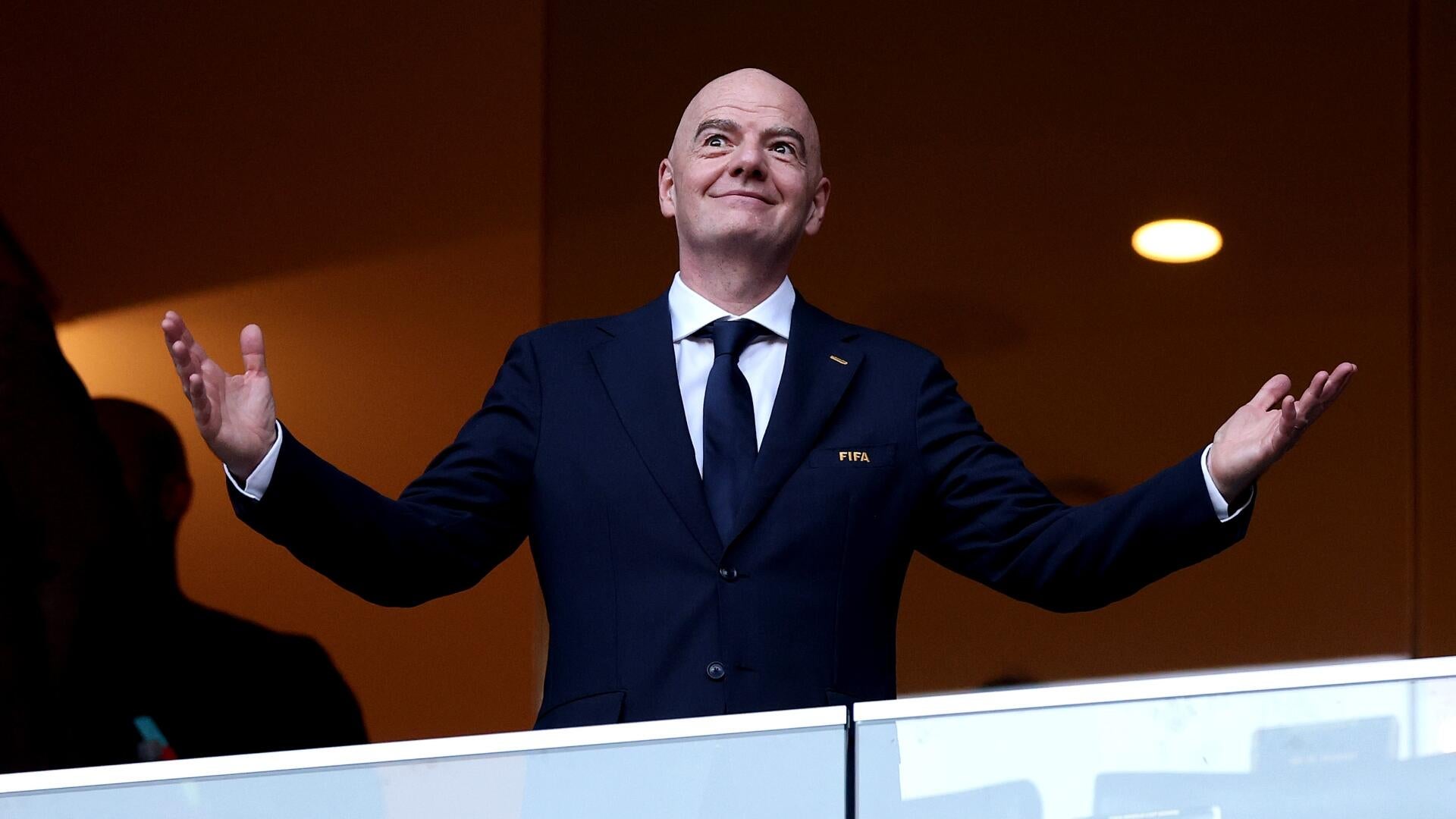
The football world is in an uproar, with FIFA President Gianni Infantino's ambitious — and highly contentious — proposals for a new suite of global competitions facing near-universal rejection, casting a long shadow over his leadership. The fallout threatens to destabilise international football's governing body as powerful regional confederations openly defy the Swiss-Italian administrator.
Global Pushback to Infantino's Vision
Infantino’s grand plan, which includes a revamped 24-team Club World Cup and a new global Nations League, has been met with a chorus of disapproval from some of the sport's most influential figures and bodies. Both the Asian Football Confederation (AFC) and CONCACAF, representing North, Central American, and Caribbean football, have publicly expressed their opposition, according to CBS Sports NY. Their stance significantly undermines Infantino's ability to push through reforms, as these confederations hold considerable voting power within FIFA.
The strongest rebuke, however, has come from UEFA, European football's powerful governing body. UEFA president Aleksander Čeferin has not only publicly condemned the proposals but has also reportedly instructed his executive committee to boycott a meeting called by Infantino to discuss the matter further. This unprecedented snub signals a deep fracture within football's upper echelons and a direct challenge to Infantino's authority.
The core of the dispute revolves around Infantino’s claims that a consortium of anonymous investors has offered a staggering $38 billion (approximately A$50 billion) for the rights to these new tournaments. Critics, including UEFA, have demanded greater transparency regarding these investors and the financial model underpinning such a colossal sum. The lack of clarity has fuelled suspicions and concerns about the long-term impact on the sport's integrity and traditional structures.
Advisor Resignation Adds to Turmoil
Adding to Infantino's woes, a key advisor, former Manchester United chief executive David Gill, has reportedly resigned from his post, citing irreconcilable differences over the proposed changes. Gill's departure is a significant blow, as he was seen as a bridge between FIFA and more traditional footballing powers. His resignation further isolates Infantino and underscores the deep divisions his plans have created within FIFA's inner circle, as reported by CBS Sports NY.
Sources close to FIFA suggest that Infantino's determination to push through these changes stems from a desire to secure new revenue streams and leave a lasting legacy. However, the apparent lack of consultation and the perceived unilateral nature of his decision-making have alienated many, leading to accusations of an autocratic leadership style.
The Australian Football Perspective
For Australian football, the unfolding drama at FIFA has significant implications. As a member of the AFC, Football Federation Australia (FFA) would be directly impacted by any changes to international competition structures. While FFA has yet to issue a public statement on the specific proposals, the AFC's opposition suggests that the current sentiment down under would likely align with regional solidarity. Participation in a new Club World Cup, for instance, could offer unprecedented exposure and financial benefits for A-League clubs, yet the broader concerns about governance and transparency remain paramount.
The uncertainty surrounding FIFA's future direction also has potential ramifications for Australia's bids for future major tournaments, including the Women's World Cup. A fractured FIFA leadership could complicate the bidding process and impact the stability required for such large-scale events.
An Unstable Future for International Football?
The current crisis represents arguably the most significant challenge to Infantino's leadership since he took the helm in the wake of the 2015 FIFA corruption scandal. His mandate was to restore trust and stability to the organisation, yet his current actions appear to be doing the opposite. With powerful confederations openly rebelling and key advisors jumping ship, the path forward for Infantino and FIFA looks increasingly fraught with peril. The coming months will be critical in determining whether Infantino can navigate this storm or if the global football community will demand a different direction for the sport's supreme governing body.