
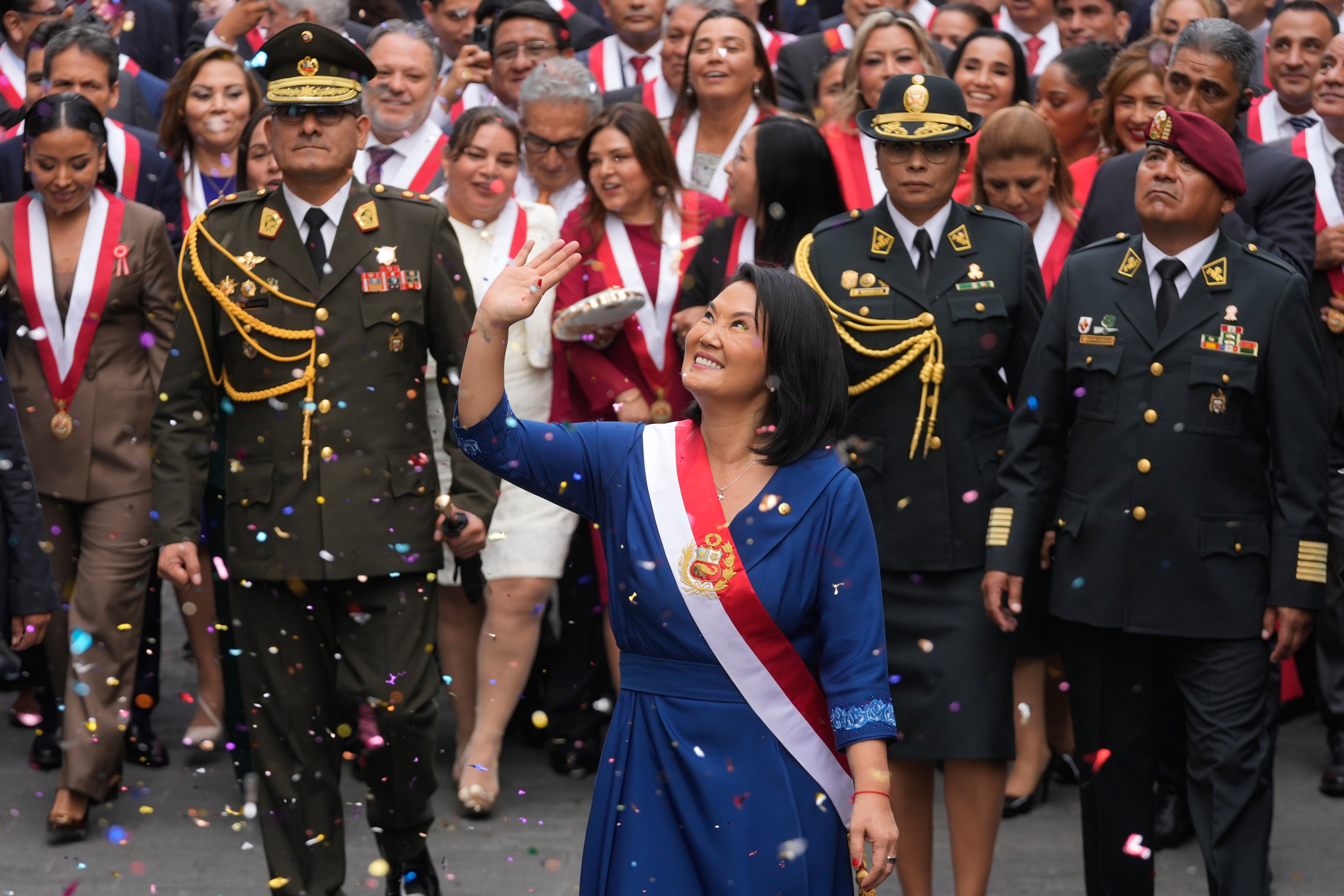
Lima, Peru – In a momentous inauguration, Keiko Fujimori, daughter of the divisive former president Alberto Fujimori, has officially taken the reins as Peru's new leader. The 51-year-old conservative, who secured a narrow victory at the polls, has wasted no time in declaring her primary objective: to confront the nation's soaring crime rates with an "iron fist." Her assumption of power marks a significant chapter for Peru, bringing with it both hope for stability and lingering concerns over the deep-seated political divisions that have long plagued the South American nation.
A Divisive Legacy Looms Large
Fujimori's presidency is inextricably linked to the controversial 1990s rule of her father, Alberto Fujimori, who is currently serving a prison sentence for human rights abuses and corruption. This familial shadow has cast a long and often polarising light over her political career. Supporters of Keiko Fujimori champion her as a strong leader capable of restoring order and economic prosperity, echoing sentiments felt by many who recall her father's crackdown on the Shining Path insurgency. However, critics vehemently oppose her, fearing a return to authoritarianism and a weakening of democratic institutions. NPR World reported on the palpable tension surrounding her victory, underscoring the deep ideological chasm that defines Peruvian politics.
"Iron Fist" Approach to Crime
During her campaign, Fujimori made her stance on crime unequivocally clear, promising a tough-on-crime agenda that resonated with many Peruvians weary of insecurity. Her pledge to combat criminal elements with an "iron fist" suggests a policy pivot towards stricter law enforcement and potentially significant reforms within the justice system. While specific details of her crime-fighting strategy are yet to be fully articulated, observers anticipate a robust response to issues such as organised crime, drug trafficking, and street violence. The approach is likely to draw comparisons to similar strategies implemented by leaders in other Latin American nations grappling with similar challenges, all while keeping a close eye on civil liberties.
Economic Outlook and Regional Ties
Beyond domestic security, Fujimori's administration faces the critical task of steering Peru's economy. The nation boasts rich mineral resources and a growing agricultural sector, but global economic uncertainties and domestic inequalities present considerable hurdles. Her conservative platform generally advocates for market-friendly policies and foreign investment, aiming to stimulate growth and create jobs. Analysts will be watching closely to see how she balances these economic objectives with social welfare programs and efforts to reduce poverty. Regionally, Peru plays an active role in various South American blocs. Fujimori's foreign policy is expected to maintain existing alliances while seeking to broaden trade relationships, potentially looking to new partners in Asia and Europe to diversify Peru's economic outlook beyond traditional markets.
The Road Ahead for Peru
Keiko Fujimori's presidency ushers in a period of intense scrutiny and high expectations. Her ability to unite a deeply fractured nation, deliver on her tough-on-crime promises, and navigate complex economic and social challenges will define her tenure. The legacy of her father, while a persistent undercurrent, will ultimately be overshadowed by her own actions and policies. As Peru looks to the future, the coming months will reveal the true direction and impact of its new leader, a figure whose rise to power is as compelling as it is complex. The stakes for the nation, with its population of over 33 million, are undeniably high as it embarks on this latest political chapter.


