
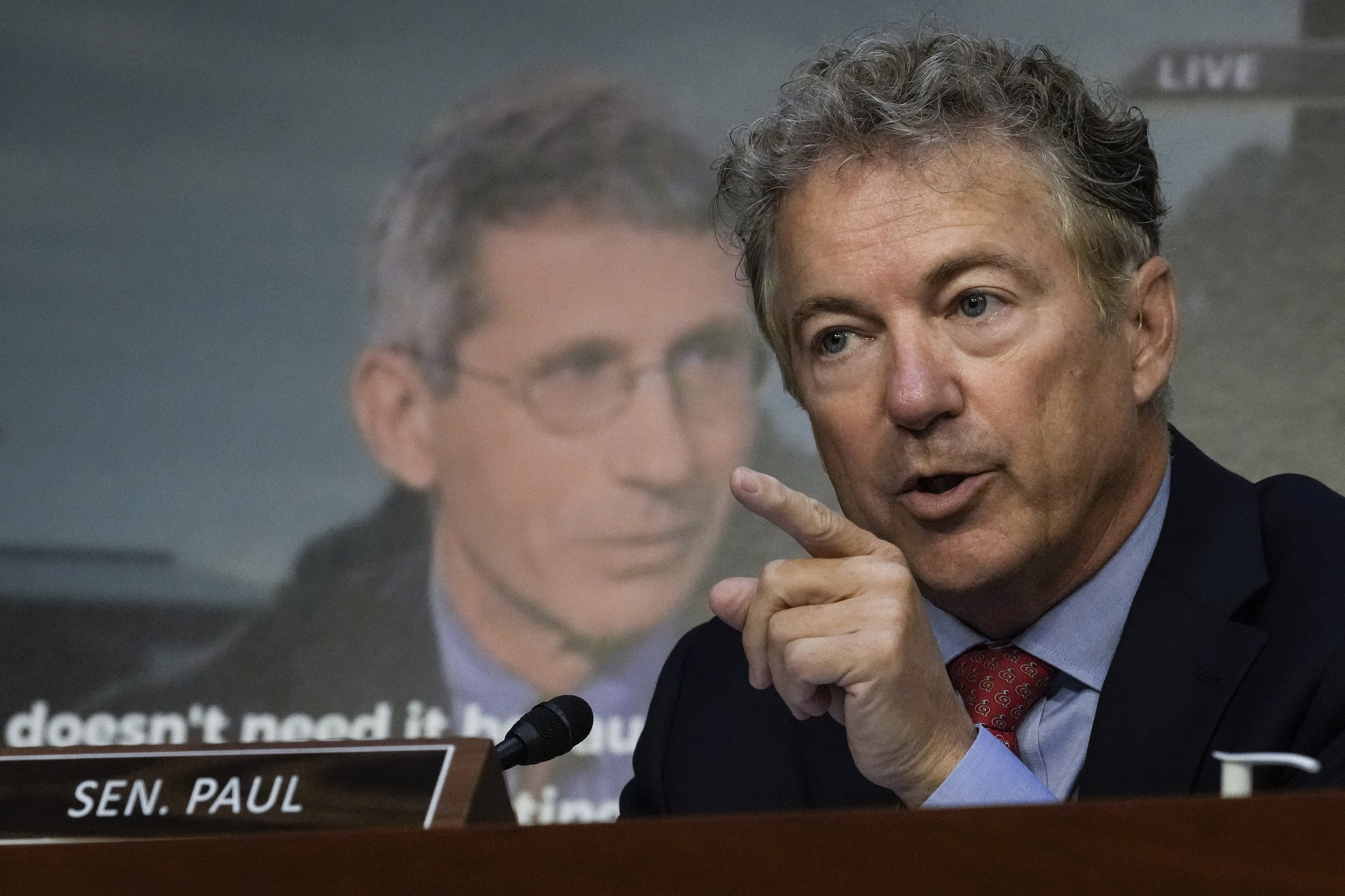
WASHINGTON D.C. — The political fireworks are set to fly on Capitol Hill this Wednesday as America’s erstwhile COVID-19 czar, Dr. Anthony Fauci, faces a highly anticipated and potentially explosive Senate hearing. At the heart of the impending confrontation is Republican Senator Rand Paul, who promises to grill Fauci on the contentious origins of the pandemic, armed with what he claims is Fauci's own 'diary' – a trove of emails and documents that Paul asserts expose inconsistencies in the former health official's public statements.
The hearing, which has been building in anticipation for months, marks a renewed effort by some conservative lawmakers to scrutinise the early days of the pandemic and the scientific community's understanding of how the virus emerged. Fauci, who became a prominent and often polarising figure during the global health crisis, has consistently maintained that the most likely origin of COVID-19 was a natural spillover event from animals to humans. However, the 'lab leak' theory – that the virus accidentally escaped from a research facility, possibly the Wuhan Institute of Virology – has gained increasing traction in recent years, particularly among Republicans.
Paul's 'Diary' Offensive
Senator Rand Paul, a vocal critic of Fauci's handling of the pandemic and a staunch proponent of the lab leak theory, has been a central figure in pushing for greater transparency. According to NPR Politics, Paul is expected to leverage a collection of Fauci's emails and internal communications, which he controversially labelled a 'diary,' to challenge the doctor's assertions. These documents, previously made public through various Freedom of Information Act requests and investigations, reportedly contain discussions and scientific assessments from early 2020 that Paul argues show a different initial perspective on the virus's origins than what was later publicly presented.
While the specific contents Paul intends to highlight remain under wraps, the Kentucky Republican has previously implied that these communications reveal an early acknowledgement within scientific circles of the plausibility of a laboratory incident, even as public statements leaned towards natural origins. This discrepancy, Paul will likely contend, demonstrates a lack of candour or a deliberate attempt to downplay certain hypotheses.
Unpacking the Origin Debate
The fundamental disagreement revolves around the aetiology of SARS-CoV-2. The natural origin theory posits that the virus jumped from an animal, likely a bat, to humans, possibly via an intermediate host, in a process similar to previous zoonotic diseases. Proponents point to the genetic similarities with other bat coronaviruses and the presence of a wet market in Wuhan as potential evidence. Dr. Fauci has repeatedly emphasised the weight of scientific evidence supporting this pathway.
Conversely, the lab leak theory suggests the virus could have originated from research, potentially involving gain-of-function experiments, at a facility like the Wuhan Institute of Virology. This hypothesis gained renewed attention after intelligence reports indicated some U.S. agencies lean towards it, though without definitive proof. Critics of Fauci have accused him of downplaying this possibility, particularly given past U.S. funding for some research at the Wuhan lab.
The Australian Lens: A Public Health Reckoning
For Australian readers, this political and scientific showdown in Washington holds significant implications. The global response to COVID-19, including severe lockdowns, border closures, and mass vaccination campaigns, mirrored policies enacted across Australia. Understanding the origins of the virus is not merely an academic exercise; it informs future pandemic preparedness, biosecurity protocols, and potentially, international relations regarding scientific collaboration and oversight. The perceived transparency – or lack thereof – from figures like Dr. Fauci resonates with a public that endured unprecedented restrictions and is eager for a full accounting of how the world arrived at this juncture. The outcome of Wednesday's hearing could further fuel debates Down Under about accountability and the robustness of scientific advice provided to governments during crises.


