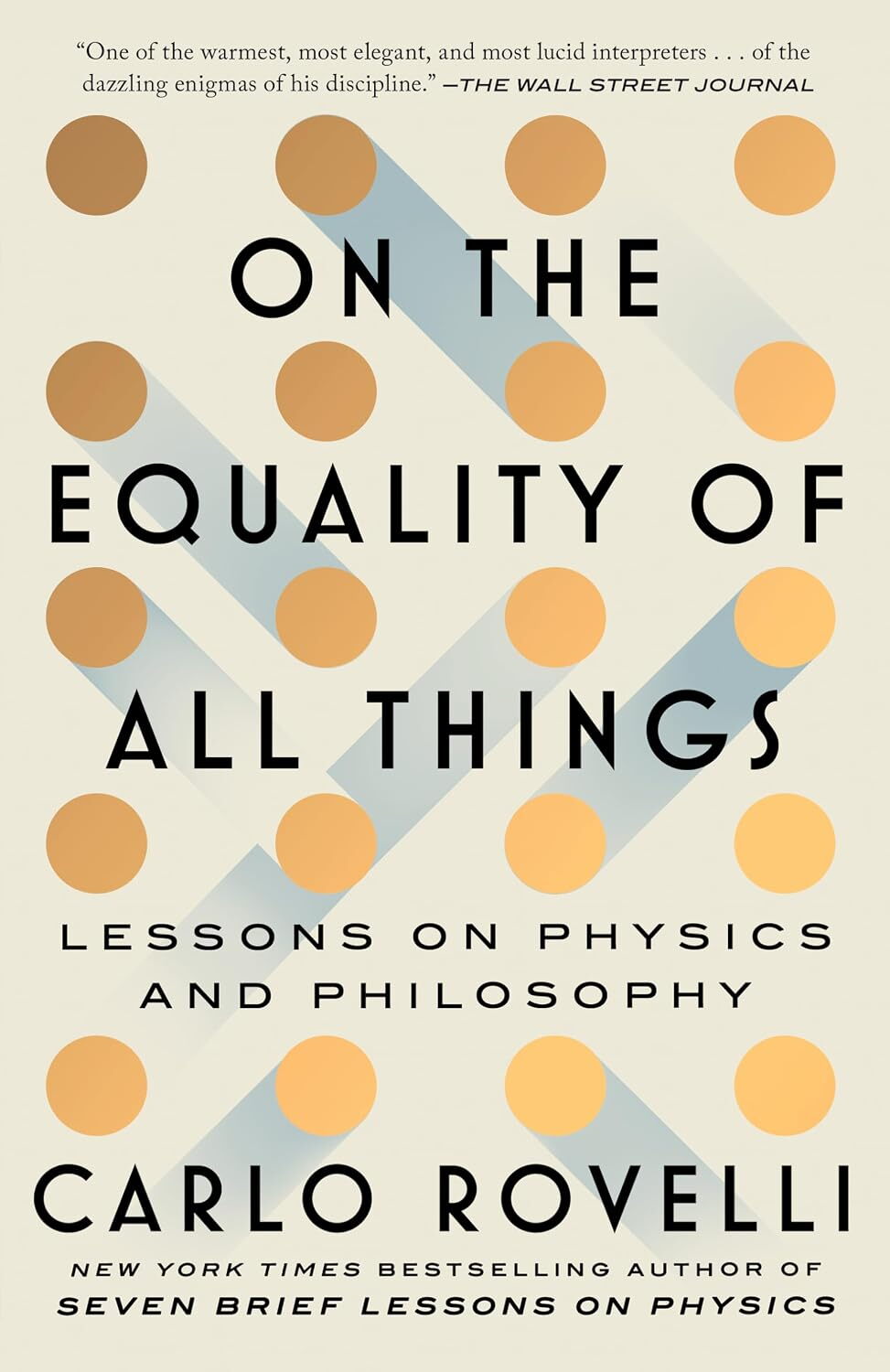
World-renowned physicist and bestselling author Carlo Rovelli is set to provoke significant thought with his latest literary offering, which delves into the profound question of whether reality and the universe are truly within the grasp of human comprehension. The new book, as reported by NPR Arts, grapples with the ambitious notion that our scientific quest for absolute knowledge might be inherently limited.
Rovelli, whose previous works have made complex physics accessible to a global audience, is known for his poetic prose and ability to intertwine scientific inquiry with philosophical contemplation. His newest exploration promises to be no different, inviting readers on a journey through the frontiers of theoretical physics and ancient philosophy to confront the boundaries of human understanding.
The Unknowable Universe: A Scientific Heresy?
The central premise of Rovelli’s latest work appears to directly challenge a long-held scientific aspiration: the complete and exhaustive mapping of all existence. For centuries, the scientific method has operated under the implicit assumption that, given enough time, resources, and intellect, every facet of the universe could eventually be deciphered. From the smallest subatomic particles to the grandest cosmic structures, the goal has often been presented as a solvable puzzle.
Rovelli, however, suggests a more nuanced, perhaps even humbling, perspective. He posits that certain aspects of reality may remain perpetually beyond our grasp, not due to a current lack of tools or theories, but due to fundamental limitations inherent in the very act of observation and the nature of reality itself. This isn't merely an acknowledgment of current gaps in knowledge but a deeper philosophical inquiry into what constitutes 'knowing' and whether a complete, objective understanding is even a coherent concept.
Weaving Science and Philosophy
To construct his arguments, Rovelli masterfully draws upon both cutting-edge scientific theories and centuries of philosophical thought. He likely explores concepts from quantum mechanics, where the act of observation itself influences outcomes, and touches on theories of time and space that challenge our intuitive perceptions. These scientific insights are then interwoven with philosophical traditions, perhaps referencing thinkers from ancient Greece to modern phenomenology who have pondered the nature of consciousness, perception, and ultimate truth.
His approach mirrors that of many great scientific minds who understood that profound questions often require cross-disciplinary thinking. By bridging the seemingly disparate fields of physics and philosophy, Rovelli aims to provide a richer, more holistic framework for contemplating existence. He asks us to consider that the very questions we ask might shape the answers we receive, and that our human-centric models of reality may not encompass all that there is.
Implications for Australian Research and Funding
For the Australian scientific community, particularly those engaged in fundamental research, Rovelli's ideas present both intellectual stimulation and potential introspection. While local institutions like the CSIRO and universities across the country continue to push boundaries in areas from quantum computing to astrophysics, a shift in perspective on the ultimate 'knowability' could subtly influence long-term research strategies and even public funding priorities.
If the universe is not entirely knowable, does it alter the perceived value of pursuing certain lines of inquiry? Or does it merely underscore the importance of understanding the limitations of our models and embracing the ongoing wonder of the unknown? These are not trivial questions in a landscape where research grants are often measured in millions of AUD and tied to tangible outcomes. Rovelli's work, NPR Arts reported, encourages a broader appreciation for the journey of discovery itself, rather than solely focusing on a definitive, final destination.