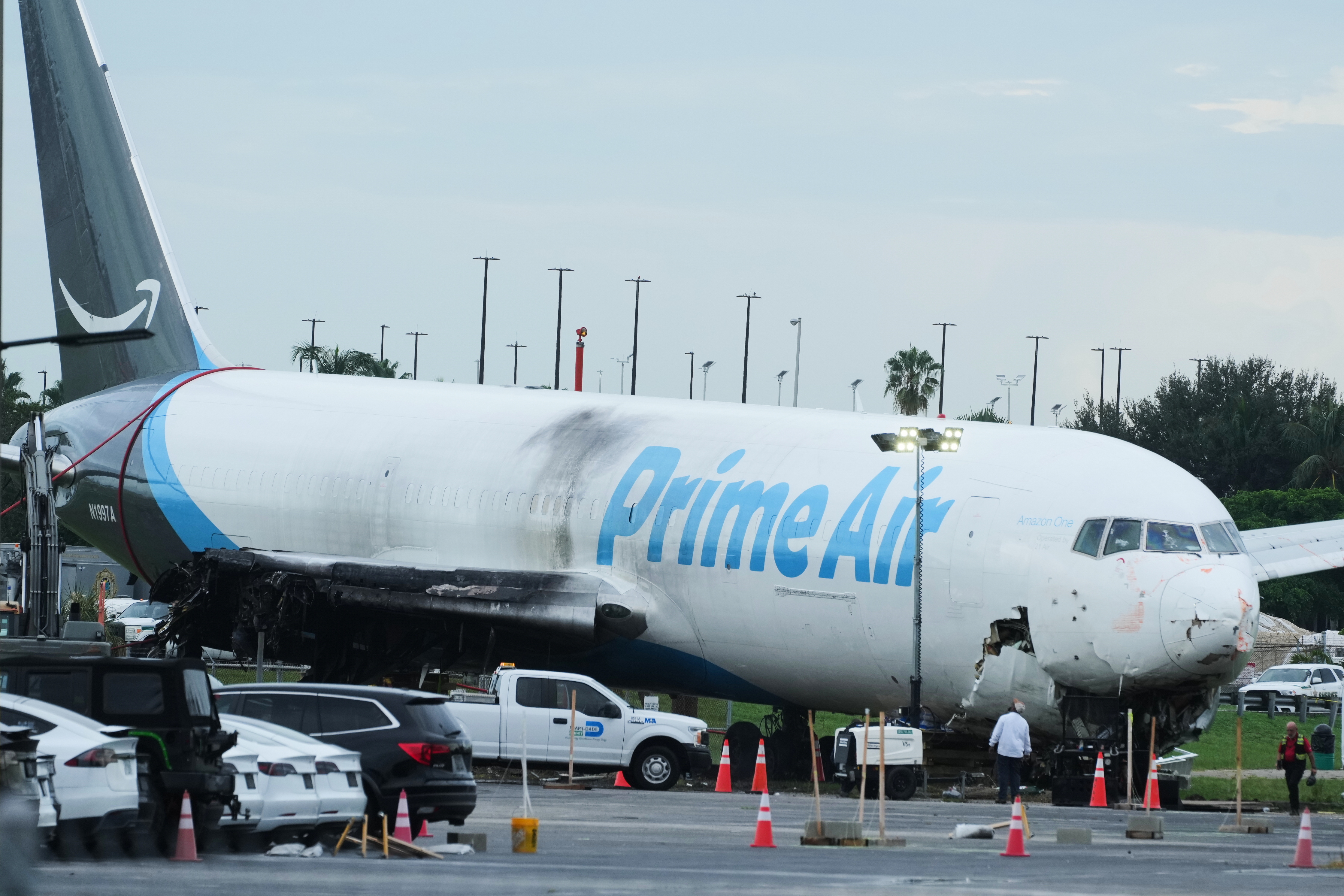
Global e-commerce behemoth Amazon has announced the immediate suspension of its partnership with cargo airline 21 Air, a move that follows a harrowing incident where one of the carrier's planes skidded off a Miami runway last month. The decision casts a shadow over Amazon's intricate logistics operations, potentially impacting the timely delivery of goods to customers worldwide, including the robust Australian market.
While investigations into the runway overrun continue, Amazon stated its commitment to safety and reliability as paramount. "We have decided to pause operations with 21 Air as the investigation into the crash continues," an Amazon spokesperson confirmed, acknowledging the seriousness of the incident that saw the Boeing 767-300 freighter overshoot the runway at Miami International Airport (MIA) on January 26. Images from the scene showed the aircraft resting with its nose section significantly damaged, having come to a halt near an embankment.
Unpacking the Miami Incident
The January 26 event involved 21 Air flight 501, operating a scheduled cargo service under Amazon's extensive logistics network, Amazon Air. The Boeing 767-300ERF, registered N760SK, reportedly veered off Runway 9 after landing, breaching the airport's perimeter fence before coming to rest in a grassy area. Miraculously, the three crew members on board sustained only minor injuries and were able to evacuate the aircraft safely. The National Transportation Safety Board (NTSB) in the United States has launched a comprehensive investigation into the cause, examining factors such as weather conditions, air traffic control communications, aircraft mechanics, and pilot performance. Early reports suggested issues with the landing gear, though no definitive cause has yet been publicly identified.
21 Air's Role in Amazon Air
North Carolina-based 21 Air has been a significant, albeit relatively new, operator within Amazon's rapidly expanding air cargo fleet. The airline commenced flying packages for Amazon as recently as 2024, utilising a fleet of Boeing 767 freighters. These aircraft are crucial components of Amazon Air, which aims to enhance the company's delivery speed and reduce its reliance on third-party carriers like FedEx and UPS for its middle-mile operations. Amazon Air planes, distinguished by their prominent 'Amazon Prime' branding, connect fulfilment centres and sortation facilities across continents, ensuring that orders reach their destinations efficiently. The suspension of 21 Air means Amazon will need to reallocate cargo capacity to other partner airlines or absorb the slack internally, a logistical challenge given the sheer volume of packages processed daily.
Potential Ripple Effects for Australian Consumers
While the direct impact on Australian deliveries might not be immediately apparent, any disruption to Amazon's global air network can have cascading effects. Australian consumers have increasingly come to rely on Amazon for a vast array of goods, with expedited shipping often a key selling point. The suspension of a carrier, particularly one operating wide-body freighters, can strain the overall capacity of Amazon Air. This could lead to longer transit times for certain international orders, particularly those relying on complex intercontinental routes that might have previously utilised 21 Air's services as part of a larger chain. While Amazon typically employs multiple carriers and has contingency plans, a sustained reduction in available air cargo capacity could translate into minor delays for cross-border shipments, particularly during peak periods like sales events.
Industry analysts estimate that Amazon invests hundreds of millions, if not billions, of Australian dollars annually into its logistics and supply chain infrastructure. This incident underscores the inherent risks in such a vast and complex operation and the critical importance of rigorous safety standards across all its partners. The ongoing investigation will provide crucial insights, but for now, Amazon navigates a temporary adjustment to its air cargo strategy.